Rodent activity in Utah County spikes during late autumn when nocturnal temperatures drop near the Wasatch Range, driving field populations off foothills near Y Mountain Trailhead and agricultural pockets along Utah…
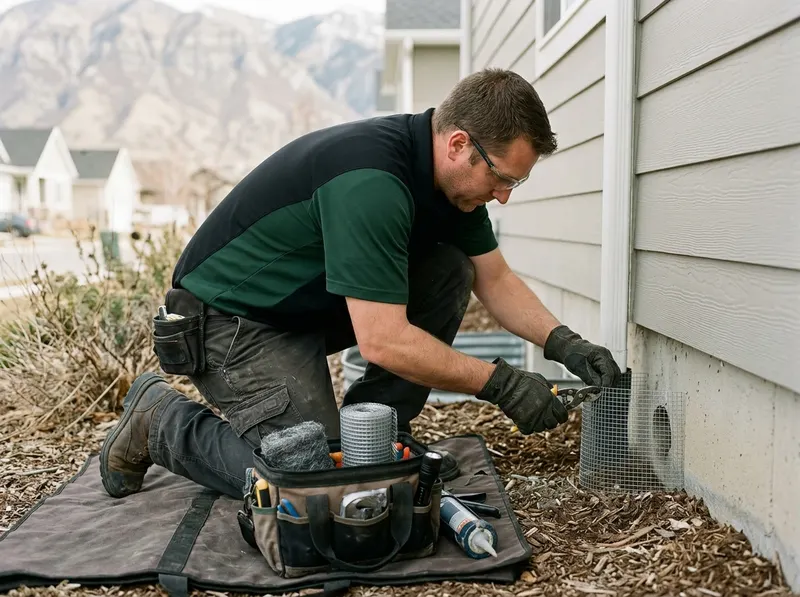
Rodent activity in Utah County spikes during late autumn when nocturnal temperatures drop near the Wasatch Range, driving field populations off foothills near Y Mountain Trailhead and agricultural pockets along Utah Lake State Park directly toward residential crawlspaces. In tree-lined neighborhoods like Rivergrove, Grandview North, and Edgemont, mature canopy cover and older stone or brick foundations often provide undetected pathways through utility penetrations, weep screeds, and roofline returns. A standard mouse requires an opening of only 6 millimeters (the diameter of a standard pencil) to gain entry. Traditional chemical baiting programs often cause rodents to perish inside drywall cavities, creating severe secondary odor and insect issues. Mechanical exclusion eliminates this vulnerability by pairing heavy-gauge hardware cloth and metal flashing with tamper-resistant snap traps positioned exclusively in out-of-reach utility spaces.
Selecting structural exclusion over recurring chemical bait stations represents a clear trade-off between upfront structural work and long-term security. Chemical exterior boxes require ongoing servicing visits every 30 to 60 days to replenish rodenticides, which introduces unnecessary active ingredients around yard spaces frequented by dogs and young children. Exclusion involves direct labor: technicians inspect the exterior foundation perimeter, seal plumbing lines behind utility meters, cap crawlspace vents with 1/4-inch galvanized steel mesh, and secure soffit gaps. If a property in Joaquin or Tree Rock features an open, unsealed stone basement, exclusion requires detailed structural sealing rather than a generic exterior granule spread.
Properties near Provo Towne Centre, Fort Utah, and Spring Creek frequently experience deer mice migration from vacant fields and canals. Step one consists of an attic-to-foundation structural survey identifying rub marks, droppings, and thermal draft leaks. Step two establishes monitored, locked interior mechanical catch systems without loose neurotoxic pellets. Step three completes the permanent physical seal using copper mesh, silicone sealants, and metal plates to protect vulnerable entry points against gnawing teeth. Service visits continue across a 10 to 14-day cycle until trap counts reach zero and exterior seals remain uncompromised.
Every job gets a firm, written price after a free on-site visit.
Tell us about your residential rodent exclusion and trapping job in Provo and we'll send a clear, written quote, usually the same day.
 Praxeno Pest Services