Securing a professional pest control service in Provo resolves acute infestations of spiders, rodents, wasps, and ants while safeguarding children, pets, and home living areas. Property owners navigating sudden intrusions near Brigham Young University or along the base of the Wasatch Range require precise structural inspections rather than high-pressure chemical over-application.

A pest control service in Provo is a specialized residential and commercial extermination application that eliminates insect and rodent populations using targeted, family-safe perimeter barriers and interior exclusion techniques.
Every service reflects the same meticulous attention to detail, whether it's a single job or a larger pest control service project across Provo.
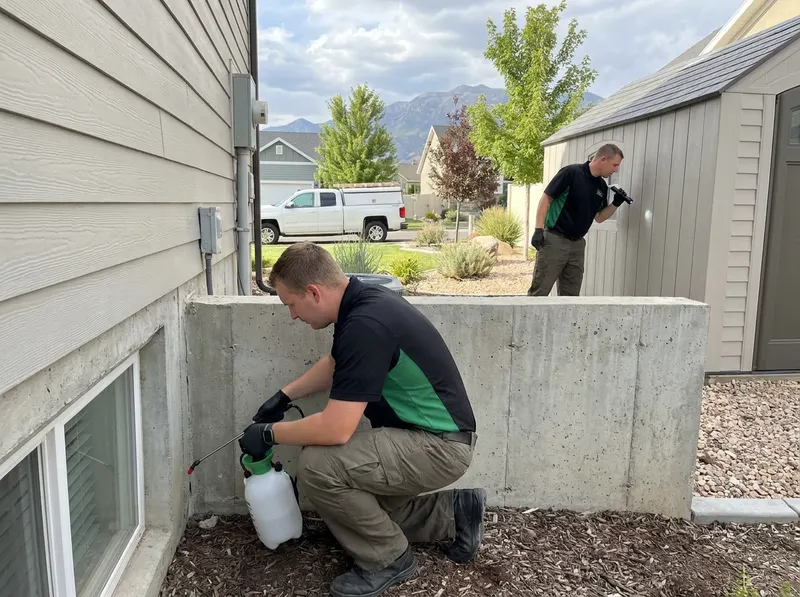
Application of non-repellent microencapsulated perimeter barriers to foundation cold joints, window wells, and low-light crawl spaces to halt funnel-web spiders and toxic black widows. Technicians utilize long-reach extension poles equipped with electrostatic cobweb dusters to physically strip silk webbing and egg sacs from foundation siding, basement window sills, crawlspace access wells, and second-story eaves. The chemical application incorporates water-based microencapsulated pyrethroids that adhere directly to porous concrete, rough brick, and structural timbers without staining or producing harsh chemical vapors. These specialized microscopic capsules cling to the bristled legs of crawling hobo spiders and black widows as they traverse treated thresholds, ensuring the active extermination agent is ingested during natural grooming cycles rather than relying solely on direct topical contact. Interior treatment focuses specifically on unfinished basement corners, furnace utility closets, sub-stair storage spaces, and crawlspace entries where funnel weavers shelter, delivering complete mechanical knockdown while maintaining a clean, odorless environment that remains entirely non-toxic to barefoot children and household pets once liquid barriers dry within 60 to 90 minutes.
Get a quote →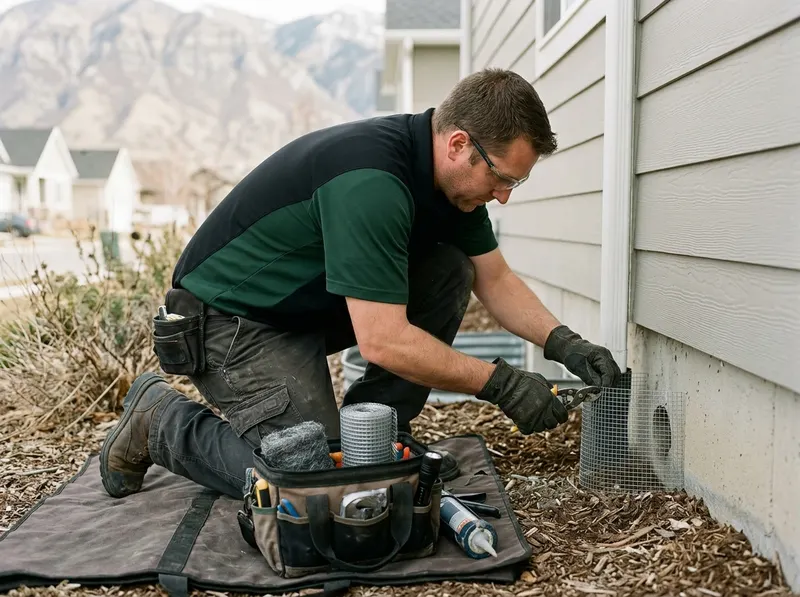
Interior mechanical trapping alongside structural sealing of garage door corner sweeps, pipe penetrations, and crawlspace vents using steel mesh and silicone to halt deer mice and roof rats. The mechanical trapping protocol avoids dangerous indoor anticoagulant poisons that can cause toxic ingestion risks for curious pets or result in rodents expiring within inaccessible drywall wall cavities. Instead, heavy-duty mechanical snap traps and dual-entry capture stations are deployed in high-probability travel runways located exclusively inside attics, unfinished mechanical rooms, crawlspaces, and suspended drop-ceiling tracks. Concurrently, exclusion specialists systematically inspect structural footings, sealing AC refrigeration line entries, weep holes, damaged foundation vent screens, and garage door rubber astragals using non-corrosive stainless steel mesh, copper wool, and high-density elastomeric exterior sealants that rodents cannot gnaw through. Exterior perimeter protection is reinforced with locked, tamper-resistant bait stations anchored securely along building foundations to intercept outdoor deer mice populations before they infiltrate finished interior living quarters.
Get a quote →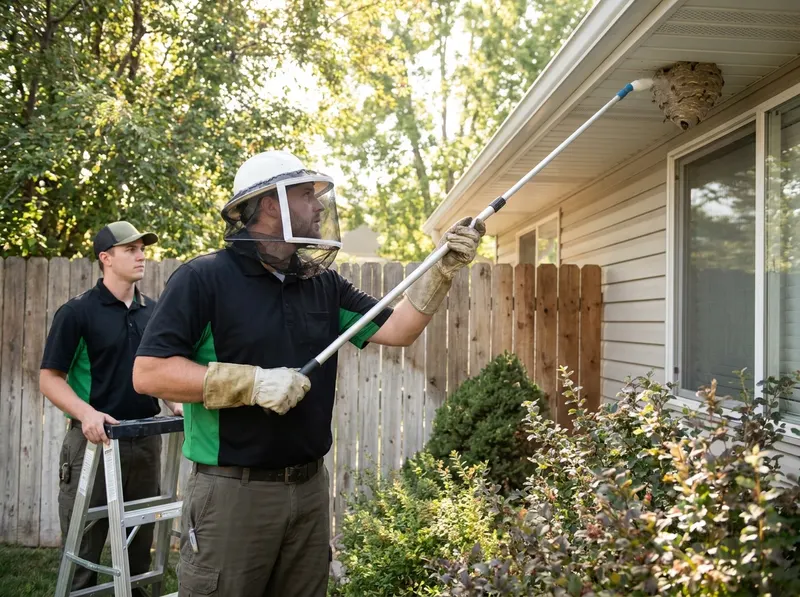
Physical removal of overhead paper wasp nests, chemical aerosol knockdown of aggressive yellowjacket colonies beneath eaves, and dusting of active subterranean ground nests. Utilizing extendable carbon-fiber delivery rods extending up to 25 feet, technicians apply rapid-knockdown botanical and synthetic aerosol pyrethrins directly into the heart of aerial paper wasp and bald-faced hornet paper nests mounted along roof fascia, second-story soffits, architectural corbels, and deck railings. Once adult flyers are neutralized, technicians physically scrape the structural pedicle attachment point and collect the comb structure to eliminate surviving pupae and pheromone traces that attract future queens. For subterranean yellowjacket infestations nestled inside landscape boulder walls, garden bark, or lawn cavities, technicians inject low-toxicity insecticidal dusts directly into the entry portals under pressure, sealing the exit void to guarantee complete subterranean colony collapse without damaging surrounding turf, ornamental perennial gardens, or residential irrigation lines.
Get a quote →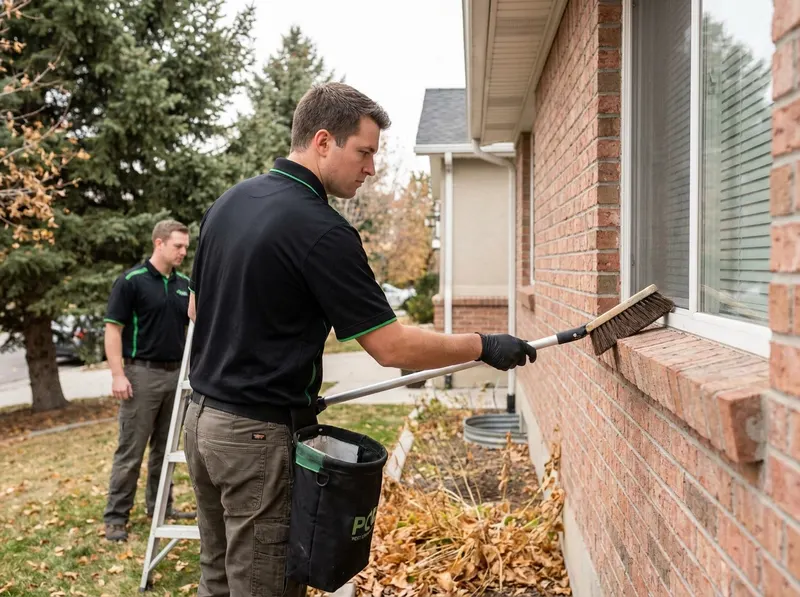
High-volume exterior wash applied directly to sun-warmed brick facades, rooflines, and window casings to stop fall migrations of boxelder bugs and invasive elm seed bugs. During late summer and early autumn along the Wasatch Front, these pervasive structural invaders mass in tens of thousands along sun-exposed south- and west-facing siding, seeking gaps around window screens, soffit joints, and door sweeps to overwinter inside interior insulation. Technicians deploy high-pressure exterior power spray rigs dispersing microencapsulated insect growth regulators and repellent barriers across exterior vertical surfaces, window perimeters, chimney shoulders, and gutter transitions up to 20 feet. This barrier leaves an invisible, rain-resistant residual layer that halts migrating insects on contact before they can crawl behind exterior cladding. When indoor penetration has already occurred, technicians utilize sealed HEPA vacuum extraction within living areas and treat window sash weight voids with non-staining desiccant dusts, eliminating winter clustering without releasing lingering chemical odors inside bedrooms.
Get a quote →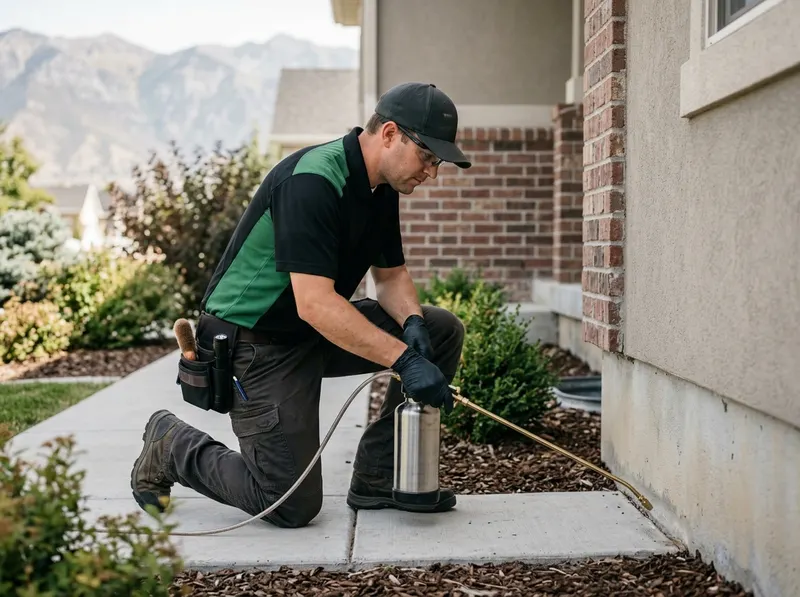
Non-repellent liquid formulations paired with sweet and protein gel baits designed for worker ants to carry active ingredients directly back into subfloor and wall-void queens. Rather than utilizing cheap commercial repellent sprays that trigger colony fission, causing a single ant colony to fracture into multiple defensive sub-colonies throughout structural floorboards, technicians deploy undetectable liquid active ingredients alongside specialized multi-attractant matrix gel baits. Worker ants foraging across kitchen countertops, baseboards, bathroom tile grouting, and foundation expansion joints walk freely across the non-repellent barrier and feed on carbohydrate and lipid bait matrices. The foraging workers transport these slow-acting micro-doses directly into hidden satellite and parent colonies situated beneath exterior concrete walkways, subfloor framing, or moist window sills. Within 7 to 14 days, the bait spreads through trophallaxis to the reproductive queens and larvae, collapsing the entire colony hierarchy at its source.
Get a quote →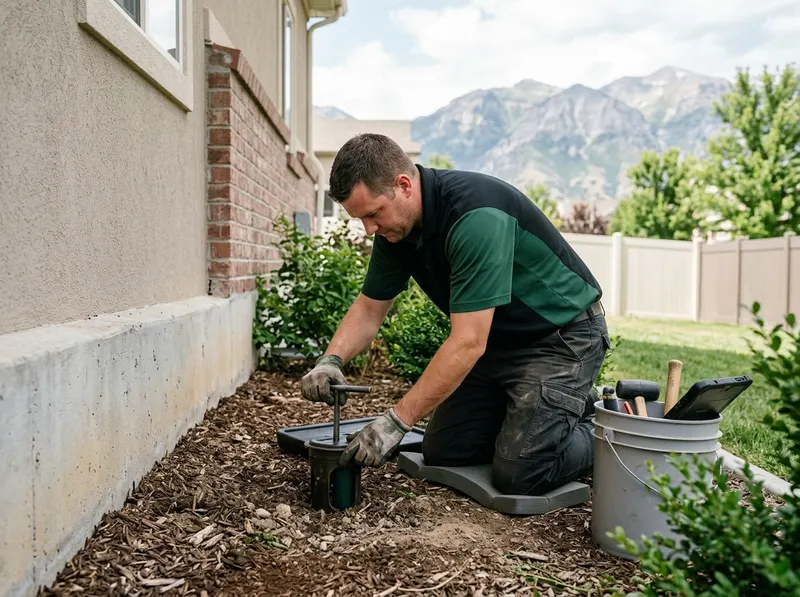
Installation of in-ground bait monitoring stations around structural perimeters and targeted non-repellent soil liquid applications along foundation footings. Subterranean termites require continuous contact with soil moisture and construct protective earthen mud tubes over exterior foundation concrete to reach interior structural wood framing, floor joists, and structural studs. Extermination services deploy low-profile in-ground bait stations installed at precise 10- to 12-foot intervals around the full dripping line of the structure. These stations contain high-density cellulose matrices infused with chitin synthesis inhibitors, which worker termites consume and circulate to their underground colony, preventing them from completing their natural molting cycle and causing systemic colony eradication. Where structural inspections reveal active indoor mud tubes or compromised structural lumber, precision liquid foundation drilling and trenching along foundation stem walls creates a continuous non-repellent liquid chemical barrier, neutralizing active termite workers instantly upon contact.
Get a quote →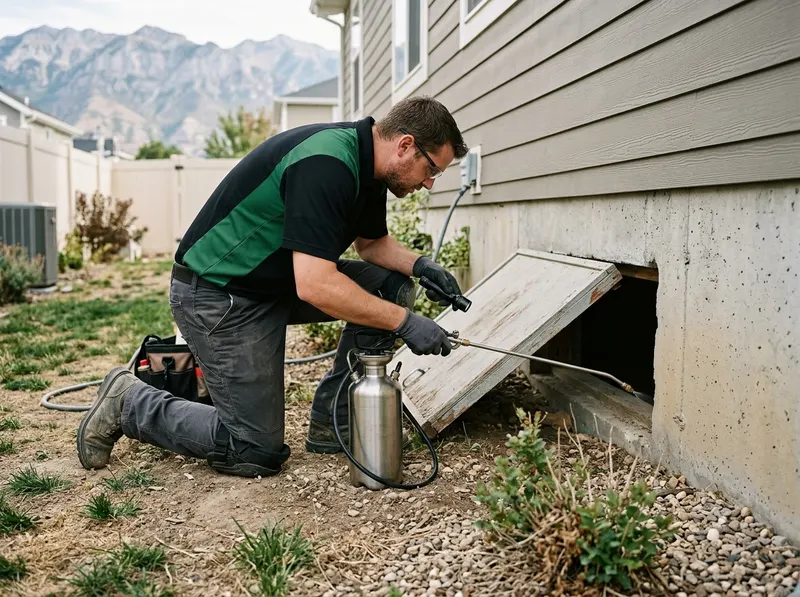
De-webbing, moisture evaluation, granular pesticide distribution, and crawl space perimeter sealing to eliminate dark-dwelling pests like silverfish, sowbugs, and camel crickets. Moisture-dense subterranean subfloors and unfinished crawlspaces represent the primary breeding chambers for humidity-loving arthropods, camel crickets, sowbugs, and centipedes that eventually migrate upward through plumbing chases into bathroom vanities and kitchen cabinetry. Technicians physically enter crawlspace environments to clear existing spider webs, inspect vapor barrier continuity, test timber relative moisture levels, and clear decaying organic debris that fosters insect reproduction. Treatment involves applying low-toxicity, water-resistant synthetic pyrethroid granules across exposed dirt flooring and along foundation stem walls, supplemented by the precise dusting of sill plates, rim joists, and foundation piers. Structural penetrations around plumbing waste lines and electrical wiring chases are mechanically sealed to halt upward pest migration into finished living quarters.
Get a quote →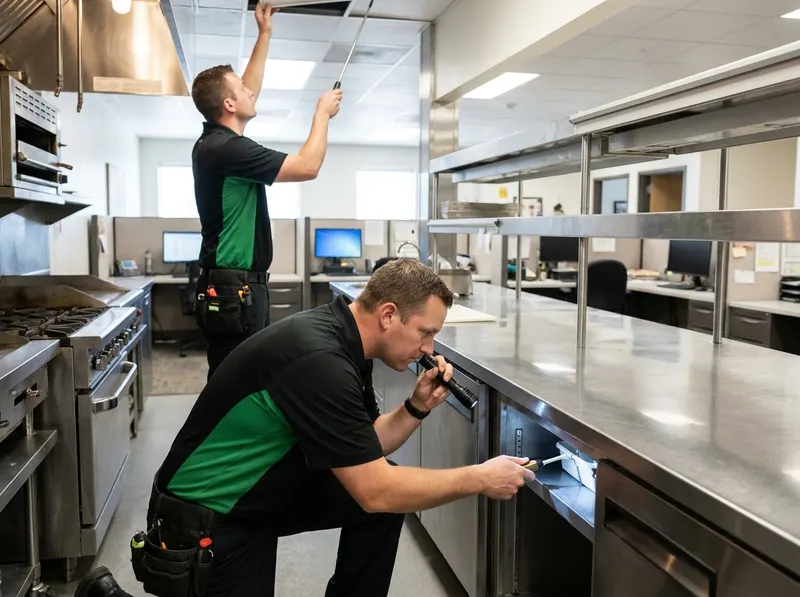
Discreet, health-code compliant monitoring, pheromone insect light trap maintenance, and interior crack-and-crevice baiting for multi-tenant retail and food-service facilities. Commercial facilities, educational properties, and corporate office campuses require rigorous integrated pest management protocols that strictly adhere to Utah County Health Department sanitary guidelines and commercial property safety standards. Technicians establish tamper-evident electronic monitoring checkpoints, install low-profile shatterproof ultraviolet insect light traps in receiving areas, and deploy specialized non-toxic insect growth regulators inside commercial food-preparation lines, dishwashing rooms, and grease traps. All chemical applications are conducted during off-peak hours or weekend intervals utilizing targeted crack-and-crevice micro-injection tools that place precise micro-droplets of non-repellent gel baits and botanical insecticidal dusts into structural equipment junctions, tile kickplates, and electrical service chases without interrupting daily business operations.
Get a quote →You get a firm, itemized quote for your pest control service before any work begins, no surprises, no pressure.
Careful prep, tidy work, and a full cleanup when we are done. We treat your home and belongings like our own.
The same trusted, background-checked team from the first call to the final check.
Selecting the correct intervention depends on the pest biology, nesting location, and severity of the intrusion. If property owners observe active web-building, wandering hobo spiders in daylight, or basement crawling insects, a targeted perimeter foundation wash combined with interior baseboard micro-spraying is the proper selection; if home residents detect attic scratching, droppings inside food pantries, or chewed subfloor insulation, whole-home mechanical rodent exclusion with heavy-gauge copper mesh and tamper-resistant exterior bait stations is required. The trade-off between exterior-only perimeter barriers and comprehensive indoor-outdoor treatments involves indoor accessibility: perimeter barriers stop 90% of crawling insects before they cross the threshold without requiring family members to vacate living rooms, whereas active indoor colony nesting requires moving furniture 12 inches away from baseboards and allowing liquid formulations 60 to 90 minutes of undisturbed drying time.
If outdoor stinging insects like paper wasps or aerial hornets nest beneath second-story soffits, roof eaves, or patio decks, targeted high-pressure mechanical knockdown paired with residual pyrethroid surface treatment eliminates immediate venomous stings; however, if ground-dwelling yellowjackets excavate subterranean nests in turf or landscaping rock beds, direct pressure sub-surface liquid injections or pyrethroid dust injections directly into the tunnel void become mandatory. For seasonal tree-dwelling pests such as boxelder bugs and elm seed bugs congregating on hot stucco or vinyl siding, a heavy exterior perimeter and structural wash stops wall voids from becoming overwintering harborage zones, but internal treatment must remain restricted to targeted wall void dusting to avoid staining living area trim. When evaluating mice infestations, snap-trap arrays placed strictly in inaccessible unfinished basements, crawlspaces, and drop-ceilings protect non-target household pets, while exterior tamper-proof bait boxes prevent rodent reproduction along building footings.
Choosing professional pest control over retail hardware store aerosol foggers eliminates the danger of chemical repellents scattering colonies deeper into drywall framing, attic thermal insulation, and ceiling chases where eradication becomes significantly more difficult and expensive.
Every project gets a firm, written price after a free on-site visit. Ranges below for orientation.
Tell us about your pest control service job and we'll send a clear, written quote, usually the same day. Or just call and talk to a real Provo pro.
(385) 541-4364
Properties along the steep bench terrain near the Y Mountain Trailhead and Tree Rock frequently experience massive seasonal incursions of field mice and predatory hobo spiders seeking shelter from rapid temperature shifts along the Wasatch Front. Conversely, homes situated near Utah Lake State Park and the lower Spring Creek wetlands face high summer humidity that drives intense mosquito breeding, pavement ant colonies, and heavy elm seed bug clusters across exterior siding. The transition from the higher bench elevations down toward the alluvial valley floor around Utah Valley Hospital and Brigham Young University creates distinct microclimates across neighborhoods like Grandview North, Edgemont, and Provost. Older residential neighborhoods featuring mature Siberian elm trees, such as Joaquin and Fort Utah, experience concentrated elm seed bug and boxelder bug migrations every August and September, requiring proactive high-pressure barrier treatments before insects penetrate window sashes and attic vents. Furthermore, the rocky foothills along Timpview and the East Bench serve as natural reservoirs for aggressive field mice and ground-nesting yellowjacket colonies, which rapidly exploit hairline foundation expansion cracks when cold autumn winds descend from Provo Canyon. Addressing pest activity across these varying Utah County geographic zones requires customized chemical persistence capable of resisting arid mountain foothill winds while delivering moisture-stable granular barriers across high-water-table properties bordering the Utah Lake shoreline.
Free estimates for Provo & the surrounding area.
 Praxeno Pest Services